
Speaker, Trainer, Facilitator, or Coach in the Philippines: Who Should You Hire for Your Corporate Event?
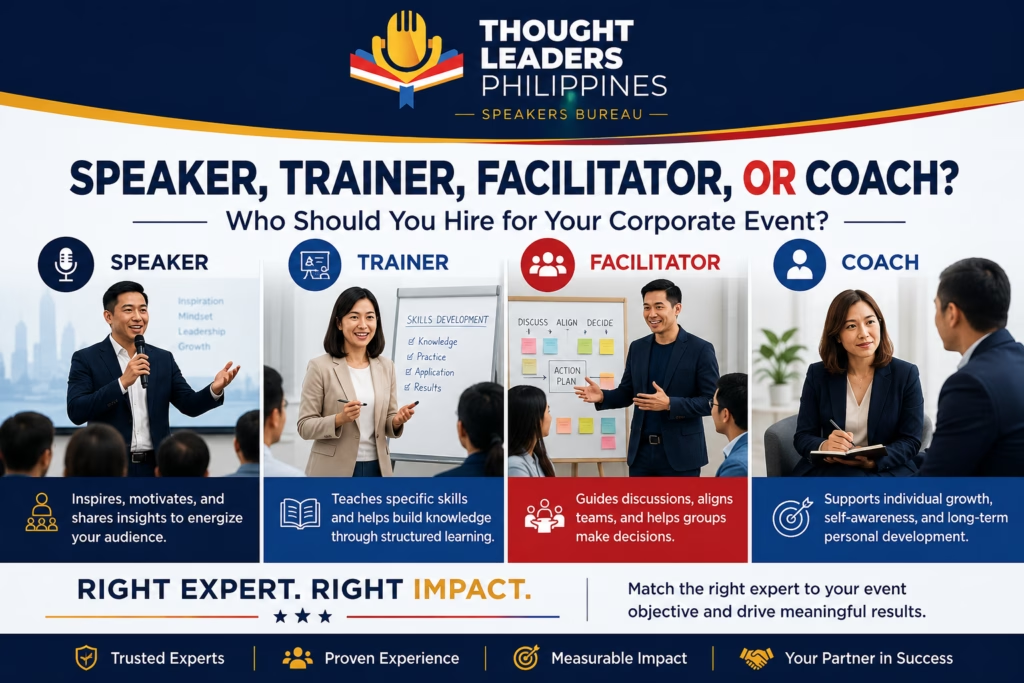
Many HR professionals, L&D leaders, and event organizers start with this sentence: “We need a speaker.” But here’s the question that can save your company time, money, and possible event heartbreak: Do you really need a speaker? Or do you need a trainer, facilitator, or coach? In the Philippines, many companies use these terms interchangeably. Someone who talks in front may be called a speaker. Someone who conducts a workshop may be called a trainer. Someone who leads a team building may be called a facilitator. Someone who gives advice may be called a coach. But in corporate learning, engagement, and organizational development, these roles are not exactly the same. And choosing the wrong one can affect the success of your event. You may invite a motivational speaker when what your team actually needs is skills practice. You may book a trainer when what your leadership team needs is facilitated alignment. You may hire a facilitator when a one-on-one or small-group coaching process would create deeper transformation. That is why before booking your next corporate learning session, leadership summit, team building, sales rally, town hall, or executive workshop, it helps to understand the difference. Why the Difference Matters Every corporate event has a purpose. Some events are designed to inspire.Some are meant to teach.Some are meant to align.Some are meant to transform behavior over time. The problem happens when the format does not match the objective. For example, if your goal is to energize employees during a company kickoff, a powerful keynote speaker may be perfect. But if your goal is to improve how supervisors give feedback, a structured training workshop may be better. If your goal is to get department heads to agree on priorities, a facilitator may be more effective. If your goal is to help senior leaders become more self-aware, a coach may be the stronger choice. In short: The expert you hire should match the outcome you want. What Is a Speaker? A speaker, often called a resource speaker in the Philippines, is usually invited to deliver a talk, keynote, forum session, webinar, or conference presentation. The speaker’s role is to share insight, inspiration, perspective, expertise, stories, frameworks, or industry knowledge with an audience. A speaker is a strong choice when your company wants to: For example, a company may hire a motivational speaker for a sales rally, a leadership speaker for a managers’ conference, a mental health speaker for a wellness program, or an AI speaker for a digital transformation event. The best speakers do more than talk. They connect the message to the audience’s reality. They make people think, feel, reflect, and act. But here’s the important reminder: A speaker is ideal for awareness, inspiration, and perspective.A speaker is not always enough for deep skills development. If your expected output is behavioral change, practice, demonstration, or competency building, you may need a trainer. What Is a Trainer? A trainer is a learning professional who helps participants develop specific knowledge, skills, and behaviors through a structured learning process. Unlike a speaker, a trainer does not only deliver content. A trainer designs activities, discussions, exercises, role plays, case studies, simulations, and applications that help participants learn by doing. A trainer is a strong choice when your company wants employees to: For example, if your supervisors need to learn how to coach employees, conduct performance conversations, handle conflict, or manage teams, a training program is more appropriate than a short motivational talk. Training is also better when the company expects measurable learning outcomes. A good corporate trainer in the Philippines should be able to answer questions like: “What should participants be able to do after the session?”“What activities will help them practice?”“How will we know if learning happened?”“How will this training connect to workplace performance?” In short: A speaker delivers a message.A trainer develops capability. What Is a Facilitator? A facilitator is someone who guides a group process so participants can think, discuss, decide, align, and produce outputs together. A facilitator is not necessarily the center of attention. In fact, the best facilitators know when to step back so the group can participate meaningfully. A facilitator is a strong choice when your company wants to: For example, if your management team needs to review business performance, clarify priorities, develop action plans, or strengthen collaboration across departments, you do not simply need someone to “give a talk.” You need someone who can design and manage the conversation. This is where facilitation becomes powerful. A facilitator helps the group move from scattered opinions to shared understanding. From discussion to decision. From energy to commitment. This is especially useful for team buildings, strategic planning workshops, mid-year reviews, leadership alignment sessions, culture-building programs, and organizational development interventions. In short: A speaker talks to the audience.A trainer teaches the audience.A facilitator draws ideas from the audience and guides them toward an output. What Is a Coach? A coach helps individuals or small groups reflect, gain clarity, improve self-awareness, set goals, and commit to action. Coaching is usually more personal, focused, and developmental. It may happen one-on-one, in small groups, or as part of a leadership development program. A coach is a strong choice when your company wants to help leaders or employees: Unlike a speaker or trainer, a coach does not always provide direct answers. A coach asks powerful questions, listens deeply, challenges thinking, and helps the coachee discover insights and next steps. Coaching works best when the desired change requires reflection, mindset work, personal accountability, and sustained support. For example, a high-potential manager may attend leadership training to learn key skills. But if that manager struggles with confidence, emotional regulation, executive presence, or decision-making habits, coaching may create deeper progress. In short: A trainer develops skills.A coach develops the person behind the skills. Quick Guide: Who Should You Hire? Your Company Needs To… Best Expert to Hire Inspire employees during a major event Speaker Teach practical workplace skills Trainer Guide group discussion and decision-making Facilitator Support personal leadership growth Coach
“Why Internal Events Fail — And How the Right Speaker Can Change That”

SPEAKERS BUREAU IN THE PHILIPPINES: In many companies, internal events—like employee town halls, team celebrations, annual kickoffs, or learning sessions—are treated as just another calendar item. Slides are shown. Announcements are made. A few people clap. But then what? Silence. No transformation. No follow-through. No energy. The truth is, many internal events fail not because of logistics, but because of lack of inspiration and alignment. And that’s where the right speaker, with the right message, from the right speakers bureau in the Philippines, makes all the difference. 💔 Common Reasons Why Internal Events Fall Flat 1. No Emotional Connection Data and memos don’t move people—stories and shared values do. Employees tune out when they can’t see themselves in what’s being said. A speaker who can tap into your people’s emotions while linking it to the company’s mission sparks something powerful. 2. Lack of Relevance Generic messages delivered by someone with no context of the company or industry will always feel like background noise. Internal events often miss the mark because the message doesn’t address current realities or future aspirations of the organization. 3. One-Way Communication Most internal events are a monologue, not a conversation. This leaves employees feeling unheard and disengaged. Great speakers don’t just talk—they ignite discussions, shift thinking, and encourage ownership. 4. No Follow-Through You can have a great speech, but if it doesn’t trigger change or action, what’s the point? The best speakers offer frameworks, takeaways, and actionable ideas that teams can apply immediately and leaders can reinforce. 💡 What the Right Speaker Can Bring to the Table When you partner with a professional speakers bureau in the Philippines like Thought Leaders Philippines, you’re not just hiring someone to fill an hour. You’re bringing in a change agent who can create clarity, spark momentum, and align your people to the bigger picture. Here’s how the right speaker can transform your internal event: 🧭 How to Choose the Right Speaker for Your Organization When selecting a speaker or facilitator, don’t settle for who’s popular—look for who’s purposeful. Ask yourself: And most importantly—are they represented by a reputable speakers bureau that understands your business context and can recommend the right fit? ✨ This is What We Do at Thought Leaders Philippines Speakers Bureau At Thought Leaders PH, we curate, manage, and connect organizations with the top speakers, trainers, consultants, and facilitators in the Philippines. Whether it’s for: …we can match you with purpose-driven professionals who inspire action—not just attention. Our speakers don’t just speak.They ignite transformation. 📌 Final Thought Internal events don’t have to be forgettable.With the right message, delivered by the right speaker, they can become turning points—moments where people reconnect with purpose, renew their commitment, and rise to the next level. ✅ Don’t just book an event.🎤 Book impact. Talk to us at Thought Leaders Philippines Speakers Bureau today.